
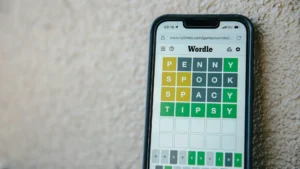
Wordle is at its best when you’re almost there.
You’ve got a few green tiles, a couple of yellows, and one stubborn letter that just won’t click. You don’t want the answer handed to you — but you also don’t want to waste your streak on a blind guess. That’s where Wordle hints come in.
Used the right way, hints don’t spoil the puzzle. They sharpen your thinking, help you test smarter guesses, and keep the satisfaction of solving it yourself. Used the wrong way, though, they can turn Wordle into a daily chore instead of a fun challenge.
Here’s how to use Wordle hints without ruining the game.
Are Wordle hints “cheating”?
This is the question many players wrestle with.
Some people treat Wordle like a personal purity test: no hints, no help, no exceptions. Others see hints as part of the experience — a way to learn patterns, avoid repeated mistakes, and improve over time.
The truth is simple: hints aren’t cheating if they help you think, not copy.
A hint that tells you how many vowels are in the word or whether a rare letter is involved still leaves the thinking to you. You’re not being told the answer — you’re being nudged toward better decisions.
If hints help you understand why a word works instead of just what the word is, you’re playing Wordle the right way.
Start with the lightest hints first
The biggest mistake players make is jumping straight to strong clues.
Wordle hints work best when they’re progressive. Think of them as layers, not shortcuts.
Soft hints to try first
These are the safest hints because they don’t narrow the word too aggressively:
- How many vowels are in today’s word
- Whether letters repeat
- If the word includes an uncommon letter
- General pattern clues (like consonant-heavy words)
These hints keep most possibilities open while guiding your strategy.
If you’re playing with daily hint pages, always read Hint 1 before Hint 2. Most puzzles can be solved with just a small nudge.
Use hints to guide strategy, not guesses
A good hint shouldn’t replace your next guess — it should improve it.
Instead of thinking, “What word fits this hint?”, ask:
- What kind of word does this hint rule out?
- Which letters should I test next?
- Am I overusing common letters?
For example, if you learn that today’s Wordle includes a less common letter, your next move shouldn’t be random. It’s a signal to test that letter intentionally, not hope it appears later.
Hints are most powerful when they help you eliminate bad paths early.
Save stronger hints for late-game situations
Stronger hints — like exact letter positions or confirmation of a tricky character — should be treated like a last resort.
The best time to use them is when:
- You’re on guess 4 or 5
- You’ve narrowed the word to a small group
- You’re stuck between two or three similar options
At this stage, a stronger hint doesn’t spoil the game. It prevents frustration and helps you learn patterns you’ll recognize in future puzzles.
Using a strong hint too early, though, removes the challenge entirely. Timing matters.
When a Wordle solver makes sense
Wordle solvers get a bad reputation, but they’re not all-or-nothing tools.
A solver doesn’t have to give you the answer. Used correctly, it can act like a logic checker.
Good moments to use a solver:
- You have most letters but too many possible combinations
- You want to confirm that a word is even valid
- You’re down to your final guess and don’t want to gamble
The key is how you use it.
Instead of scanning the full list and picking the answer, use a solver to:
- See which letters still appear across possibilities
- Identify patterns you missed
- Eliminate unlikely options
Think of it as sanity-checking your logic, not replacing it.
Common mistakes that ruin the fun
Even experienced players fall into these traps:
Jumping straight to spoilers
Reading the answer too early kills engagement. If you do this often, Wordle stops feeling like a game and starts feeling like a task.
Ignoring your own guesses
Hints work best when combined with what you’ve already learned. Skipping analysis and chasing hints defeats their purpose.
Overusing the same opening words
Hints can help you realize when your starting strategy is holding you back. If Wordle feels harder lately, it might be time to rotate openings.
Treating every hint equally
Not all hints are meant to be used. Sometimes Hint 1 is enough — and that’s a win.
Build a personal “hint rule”
Many regular players follow an informal rule set, like:
- No hints until guess 3
- Only one hint per puzzle
- Solver allowed only on the final guess
There’s no official rulebook. The best approach is the one that keeps Wordle challenging but enjoyable.
If hints help you stay engaged instead of frustrated, they’re doing their job.
The goal isn’t perfection — it’s consistency
Wordle isn’t about winning every puzzle perfectly. It’s about building streaks, recognizing patterns, and enjoying a daily mental warm-up.
Hints, when used thoughtfully, actually make you a better player over time. You start noticing letter frequency, word structures, and traps that used to trip you up.
That’s not ruining the game — that’s learning it.
If you ever need a gentle nudge, daily Wordle hints can help guide your thinking step by step. And when you’re truly stuck, a solver can help you narrow things down without taking the fun away.
Play smart, stay curious, and most importantly — keep the “aha” moment for yourself.